Thursday, May 28, 2009

Uki Waza - the theory kata

I am constantly analyzing my martial arts, trying to for a simplified model. I believe once we understand the art form in increasingly simple terms - we really begin to understand it.

Lowry Sensei baked my brain with a comment he left me a few weeks ago -


"it has been posited by deeper judo thinkers than I that all of tachiwaza in judo are but extrapolation from the two most fundamantal of throws-- uki otoshi and sumiotoshi -- every other throwing condition are but footnotes to these two central ideas"

After some thought, and lots of experimentation I buy into this idea. For the most part we are either throwing people off their small toes (uki otohi) or dropping them off their heel (sumi otoshi)

So simplified statement number 1 in the new super simple theory kata is...

In throwing arts most throws take people over their toes or heels.


Ok - tracking so far?


Part 2 - uki waza as the theory kata

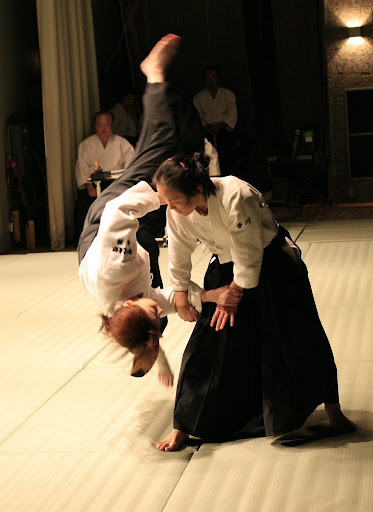
I am currently looking at the Uki Waza and examining what the centers are doing in relation to one another.

technique 15 - Mae Otoshi the centers of both uke and tori intersect. Tori crosses uke causing a throw.
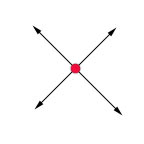


technique 16 - Sumi Otoshi the centers of uke and tori are moving in opposite directions, causing the structural failure of uke to happen.


technique 17 - Hiki Otoshi the centers of Uke and Tori move in the same direction.


So in the Uki waza of Tomiki Ryu Aikido we have three major relationship ideas about how throws happen - they can happen when centers go in the same direction, when they go in opposite directions and when they intersect.

Neat huh? The Uki Waza demonstrate the basic mechanics of all throwing technique.


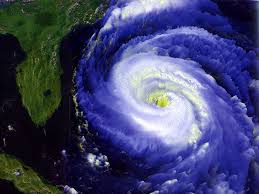
If I made the kata, I would add one more center relationship on to this subset of the kata. A guruma (wheeling) motion. One center orbiting around another. I think in nature we would find this motion in the planets rotations or in hurricanes. I feel this addition would complete the kata seen through the eyes of center relationships.


Ok Aiki/Judo nerds...thoughts?

Wednesday, May 27, 2009

Success

This past weekend one of my Shodans was out drinking.

A lady he had a casual friendship surprised him and attacked him - striking him twice in the face. She was drunk, serious and wanted to throw down. On top of that she is athletic and a trained martial artist as well.


Surprised - the blows moved him to action. He started moving her around the floor and setting her down, time and time again.

After a while she gave up. It was impossible for her to try to fight someone was wasn't even fighting her back - yet kept helping her to a safe place.

So - great success to the KyuRyu school. We produced a man who does not need to hurt people yet will not allow himself to be hurt.


No great war stories, no splendid application of technique. Just a moment of trouble - action then peace.

Peace through harmonious action. Both people win from a lose-lose situation.

Brillant

I recall a Jiyushinkai bumper sticker that said -

"peace and harmony through nonviolent action."

Indeed.

Tuesday, May 19, 2009

Floating World - Ukiyo

Originally, the "ukiyo" (Japanese: 浮世 "Floating World") was a Buddhist term describing the transient nature and suffering that defines our earthly existence.

'Ukiyo' is a little word that conjures up the entire worldview of Buddhism, which is this: human existence, is too temporary to get yourself attached to it so much.

In other words, 'ukiyo' is 'the fleeting world'. It is also an allusion to the homophone "Sorrowful World" (憂き世), the earthly plane of death and rebirth from which Buddhists sought release.

This world.


Later Ukiyo described the urban life style, especially the pleasure-seeking aspects, of Edo Period Japan (1600–1867).

This view of the Floating World is centered on Yoshiwara, the licensed red-light district of Edo (modern Tokyo). The area's brothels, teahouses and kabuki theaters were frequented by Japan's growing middle class. This particular Floating World culture also arose in other cities such as Osaka and Kyoto.

The famous Japanese woodblock prints known as ukiyo-e, or "pictures of the Floating World", depict scenes of the Floating World: geisha, kabuki actors, sumo wrestlers, samurai, chōnin and prostitutes.


The contemporary novelist Asai Ryōi, in his Ukiyo monogatari ("Tales of the Floating World", c. 1661), provides some insight into the concept of the floating world:

... Living only for the moment, turning our full attention to the pleasures of the moon, the snow, the cherry blossoms and the maple leaves; singing songs, drinking wine, diverting outselvies in just floating, floating; ... refusing to be disheartened, like a gourd floating along with the river current: this is what we call the floating world...

Monday, May 18, 2009

Uki Waza Defined

Uki Waza - floating techniques

So I guess I have been leading up to this question for a few days - what does it mean to float? Every definition I have examined I thought is too limiting. But let's go through the classical definition.

I believe the classical view is that a Uki technique means you are raising the uke on their toes. You might even say you are raising, or floating, the center of uke. The toes are really a by product of this center raise.

I am pretty cool with this definition...except....except that if raising the person on the toes becomes dogma, it becomes weird. People use leverage on elbows, use extreme joint locks...etc. to cause a rise in uke's center.


So let's go back to the poetry idea I had a few blog's ago, to really capture the spirit rather than bio mechanics.

What if floating meant...

to rest or remain on the surface of a liquid; be buoyant, drift along, to move lightly and gracefully, to be free from attachment or involvement, to move or drift about: to float from place to place, to be launched

Sounds more like a spirit than just saying "put uke on their toes"


So I put this question to my Judo teacher Matl Sensei - what is uki waza?

Matl in his thick Czech accent responded "It means it is supposed to be easy."

Hot damn.

That's it. Easy and effective. Maximum efficiency with minimum effort. That is truly the meaning of all we do.

Uki waza are supposed to be easy.

I will write more on defining these throws later. But I think, "they are the easy throws" needs to soak in. Using this as my intent, rather than floating the person's center, really transformed the effectiveness of my technique. Maybe it can do the same for you.

Sunday, May 17, 2009

Sumi Otoshi vs Uki Otoshi

Uki Otoshi is the forgotten throw in the Uki Waza of Tomiki Ryu Aikido. Uki Otoshi is a floating technique where Uke is thrown off his toes while moving forward. I believe Uki Otoshi and Hiki Otoshi are identical techniques, except in Hiki Otoshi Tori kneels to the ground during execution to the technique.

Judo - Uki Otoshi


The reason I bring this up is that I believe many people mistakenly label their Sumi otoshi - corner drop, when it is really a Uki Otoshi.

Let's look at these guy's again. It is a great throw they have - but I believe it is an Uki otoshi rather than a sumi otoshi. You see during the final execution Uke is thrown forward, rather than towards the corner that defines the throw.

AikiBudokan


See...uke falls forward exactly like Uki otoshi. All the balance breaking stuff should not be part of the taxonomy of the throw, or rather it's labeling.

Now compare angles to this sport Tomiki guy. His execution is clearly towards the back corner. This is the angle of a Sumi Otoshi - in my humble opinion.


So this is some seriously picky Aiki nerd stuff. But I think returning to the principles is important and I believe is why we have the 17 kata in the first place.

So let's clarify what I believe an sumi otoshi to be further. At the moment of tori's center drop - it must must towards the outside corner. Uke of course has choice's. If uke turns into the drop, Uke can take an air fall or roll out. If their system locks up, then a backfall happens. The important part of defining this throw is the relationship between centers at the moment of execution.

Friday, May 15, 2009

Sumi Otoshi

In the Tomiki system, we have 3 techniques that are categorized as Uki Waza or floating techniques.

#16 is Sumi Otoshi or the corner drop.

I love this technique. I find so much variation in it. Some people perform it so complexly that it almost becomes a theory throw, or an art throw. Other artists use it so simply and effectively that it becomes a standard tool in their arsenal.

If there is so much variation, how can we define it?

I see the floating techniques as a dance between centers, or haras. If Tori's center is dropping towards nage's outside (soto) - likely you might have a sumi otoshi.

Imagine a man standing in front of you. He has one foot forward, as in a fighting stance. Now imagine we tie an anchor on to his belt - with the chain about 6 inches too short to hit the ground with out him bending his knees. Yep, we are going to toss that anchor to try knock him down.


But where can we toss the anchor to make it a sumi otoshi?

Look at his feet. We have to imagine a triangle. His two feet make up one line of the triangle. Imagine the tip of the triangle behind his feet - roughly where his butt would go if he sat down backwards.

Throw the anchor and see what happens. Sumi Otoshi!

What? you don't usually have time to tie an anchor on to your sparring partner? Use your center as the anchor! Any connection will do...hands, arms shoulders..etc


I don' care for the fiddly how to part of techniques. I prefer to look at the generalized principle behind how it is supposed to work. There are probably a hundred techniques that could be considered a sumi otoshi. I don't think the fall uke takes is important. In some versions they will be spun around and take an airfall. You can be kind and let them roll. In all the versions I currently do, uke takes a back fall.

Let's look at some.

here is a classic Aikido version


This next technique looks very different. Everything the arms are doing is different. The connection is different. But somehow he is doing the exact same thing - sumi otoshi.

(I chose this video because this is kind of like how my Judo teacher Matl Sensei teaches Sumi Otoshi. The teacher starts demonstrating it at 48 seconds in and goes until 1:48)


Finally here is a classic Judo version. Personally I think this version looks to hard to actually hit easily, but I want you to see the drop towards the outside to understand the principles that make all these techniques fall under the same category.

Thursday, May 14, 2009

To Float - Uki Waza

When I was studying Daito Ryu, many of the names had more poetic devices used than the pragmatic Tomiki names. Falling Leaf Throw, Hand Mirror Throw, Mountain Throw...to name a few. I like these kind of names also - it describes the spirit of the technique rather then biomechanics.


I would like to start looking at the Uki Waza (floating techniques) in a new light. I wish to be be tabula rasa and look at this through new eyes, of both as an Aikido and Judo technician and as a poet.


The Japanese


UKI

Readings: FU, u.ku, u.kareru, u.kabu, mu, u.kaberu, uki
English tags: floating, float, rise to surface


The English


From Dictionary.com Verb forms of the word "float"
float
  /floʊt/ Show Spelled Pronunciation [floht]

–verb (used without object)

1. to rest or remain on the surface of a liquid; be buoyant: The hollow ball floated.
2. to move gently on the surface of a liquid; drift along: The canoe floated downstream.
3. to rest or move in a liquid, the air, etc.: a balloon floating on high.
4. to move lightly and gracefully: She floated down the stairs.
5. to move or hover before the eyes or in the mind: Romantic visions floated before his eyes.
6. to pass from one person to another: A nasty rumor about his firm is floating around town.
7. to be free from attachment or involvement.
8. to move or drift about: to float from place to place.
9. to vacillate (often fol. by between).
10. to be launched, as a company, scheme, etc.
11. (of a currency) to be allowed to fluctuate freely in the foreign-exchange market instead of being exchanged at a fixed rate.
12. (of an interest rate) to change periodically according to money-market conditions.
13. Commerce. to be in circulation, as an acceptance; be awaiting maturity.


–verb (used with object)

14. to cause to float.
15. to cover with water or other liquid; flood; irrigate.
16. to launch (a company, scheme, etc.); set going.
17. to issue on the stock market in order to raise money, as stocks or bonds.
18. to let (a currency or interest rate) fluctuate in the foreign-exchange or money market.
19. to make smooth with a float, as the surface of plaster.
20. Theater. to lay down (a flat), usually by bracing the bottom edge of the frame with the foot and allowing the rest to fall slowly to the floor.


So dear readers, let your mind free...read down the list. What elements of this word can we apply to our application of these techniques? Let's challenge our own preconceived notions a find ever new ways to examine, create and execute floating technique.